Hair oils, compared: six weights for six kinds of strand
Hair oils are sold by plant name — argan, jojoba, castor — as if the origin were the story. The story is weight. An oil’s molecular heft decides whether it sinks into the strand or seals over it, and that single variable sorts the shelf better than any marketing story does. This assessment reads the category the way the desk reads everything: weight first, six working positions from dry-touch to sealing, then what each bottle’s label actually supports. No lab, no panel — labels, published specifications, and patterns from counted buyer feedback.
Weight decides, placement confirms
Two questions order the category. First, weight: light oils (jojoba, grapeseed, marula) absorb into the outer strand and leave little film; mid oils (argan) absorb with a richer finish; heavy oils (castor, and coconut at room temperature) sit mostly on the surface and seal. Silicone-oil blends — most “hair oils” in the styling aisle — are a class of their own: engineered films that smooth and seal without the greasy tail of a heavy plant oil. Second, placement: an oil for the scalp and fine strands needs to vanish; an oil for the ends of coarse hair is supposed to stay.
Three points on the weight band
01 · The Ordinary 100% Cold-Pressed Virgin Marula Oil — the lightest hand. A single-ingredient oil with a fast-drying, low-film profile; the brand’s own materials note its use on dry hair and scalp. Best for fine hair and anyone who wants shine without weight. The limitation is the flip side: on coarse or damaged ends it may simply not be enough.

02 · Josie Maran The Original 100% Pure Organic Argan Oil — the midweight pure oil. Unrefined, first cold-pressed argan in a dropper; richer than marula, still absorbing, with hair use documented by the brand since long before the category crowded. Best for mid-lengths that need actual conditioning rather than gloss; buyer feedback patterns consistently describe fast absorption for a pure oil.
03 · Moroccanoil Treatment Original — the sealing blend. The product that built the category: silicones (cyclopentasiloxane, dimethicone) carrying argan oil and linseed extract, applied mid-length to ends. It is a film, not a feed — it smooths, detangles, and seals, which is exactly right for coarse hair and blow-dry finishing and exactly wrong for anyone expecting nutrition. Best for thick, rough, or heat-styled ends.
The remaining weights assessed — a lighter grapeseed, a jojoba, and a viscous castor — sit at the band’s ends and change nothing about the decision these three cover.
Drops, placement, expectations
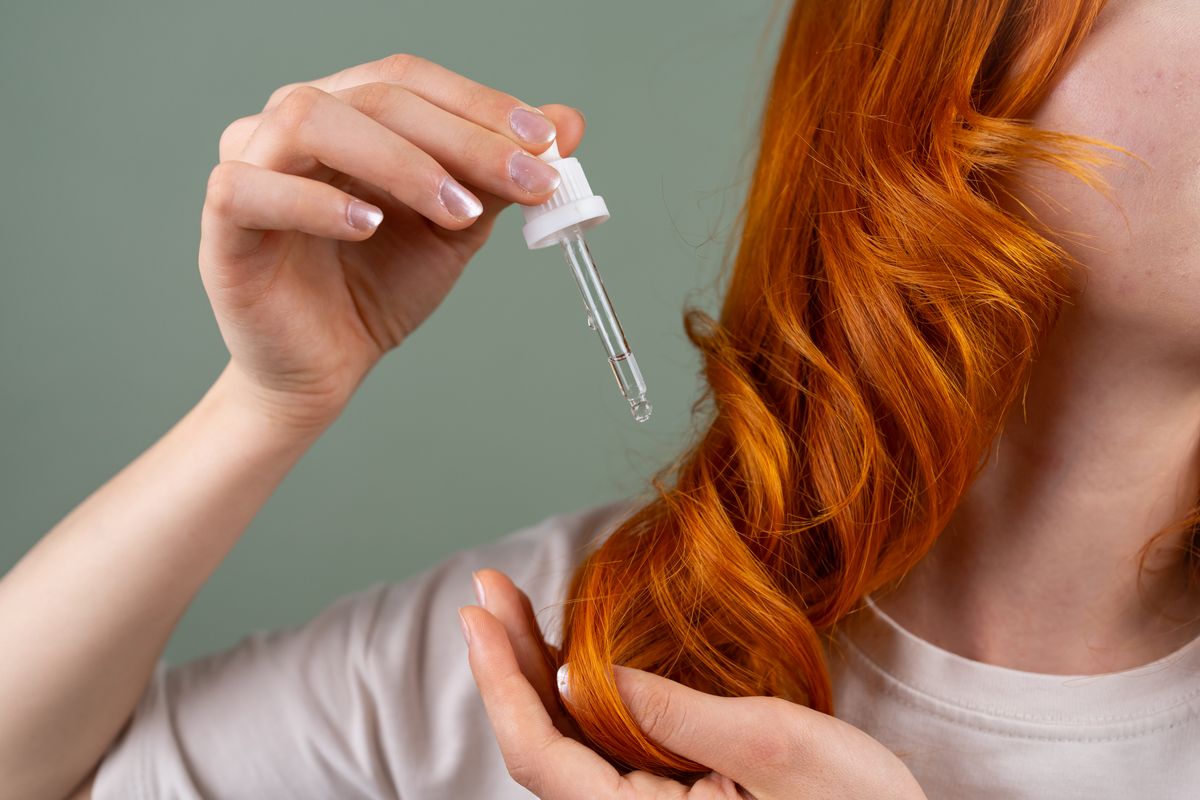
Decide placement before brand: roots and fine hair want the lightest oil that still shows, ends and coarse hair want the heaviest that never greases. On porous ends — see the desk’s porosity guide — any oil disappears faster and needs reapplying, which is placement, not product failure. Between pure oils and blends, the honest framing is this: pure oils condition the surface and cost less per ounce; silicone blends perform better on blowouts and wash out with ordinary shampoo. Start under three drops for any of them — overdosing is the most common way this category fails — and keep the rest of the desk’s hair coverage in mind when the answer turns out to be weight, not product.
The picks
Some links below may become affiliate links at a later date — if they do, we may earn a commission at no extra cost to you. Assessments are written before any commercial relationship exists.
- 01
The Ordinary 100% Cold-Pressed Virgin Marula Oil
Best for fine hair and shine without weight — a single-ingredient oil that absorbs fast and leaves little film.
- 02
Josie Maran The Original 100% Pure Organic Argan Oil
Best for mid-length conditioning — an unrefined, first cold-pressed pure oil that absorbs with a richer finish than the light tier.
- 03
Moroccanoil Treatment Original
Best for sealing coarse or heat-styled ends — a silicone-argan film that smooths and detangles, with no pretense of feeding the strand.
At a glance
Oil base, weight behavior, and label placement, read from manufacturer product pages at the time of writing.
| Specification | The Ordinary Marula | Josie Maran Argan | Moroccanoil Treatment |
|---|---|---|---|
| Base | Single marula oil | Single argan oil, unrefined | Silicone blend with argan oil and linseed extract |
| Weight on the strand | Lightest; absorbs with little film | Midweight; richer finish, still absorbing | Heaviest; coats and seals |
| Label placement | Skin, hair, and scalp use documented | Skin, hair, and nails multitasker | Leave-in hair treatment, mid-lengths to ends |
| Best for | Fine hair, shine without weight | Mid-length conditioning | Coarse or heat-styled ends |
Sources
The Ordinary — product page and face oils guide (theordinary.com) · Josie Maran — product page (josiemaran.com) · Moroccanoil — US product page (moroccanoil.com) · Aggregated public retail reviews, counted by the desk
Frequently asked
- Can hair oil repair split ends?
- No. Oil smooths and seals the split so it looks better and travels more slowly, but nothing re-joins split keratin. The repair for a split end is scissors; the oil is interim management until the next trim.
- Should oil go on wet or dry hair?
- Both work, for different goals. On damp hair, oil helps seal water in as the strand dries; on dry hair it works as a gloss and flyaway smoother. The heavier the oil, the more this matters — a heavy oil on dry hair can read as grease within hours.
- Why does oil make my fine hair look worse?
- Weight. Fine strands carry little structure to hold an oil, so the film sits outside and flattens the hair. Fine hair usually wants the lightest oil in one or two drops, or a silicone-based blend applied only to the last inch.