Hot showers and your skin barrier: the honest trade

Hot water is the most reliable comfort in body care and the least reliable promise. A long, steaming shower genuinely relaxes muscle tension and blunts stress, and it also thins the lipid mortar that holds skin cells together — the same barrier the desk covers in skin barrier 101. Both things are true at once. This piece is about holding them together rather than pretending one away.
What hot water takes
The outermost layer of skin holds water because a lipid matrix — ceramides, cholesterol, and fatty acids — seals the gaps between dead skin cells. That matrix is arranged matter, not glued-down matter, and hot water plus surfactant dissolves and rearranges it faster than either does alone. The visible receipt arrives ten minutes after toweling off: tightness, faint itch, a powdery look on shins and forearms. The longer and hotter the shower, the larger the extraction bill — and winter makes the bill worse, because cold air outside is already pulling moisture the same direction.
The trade, stated plainly
The desk will not tell you hot showers are worthless, because they are not. Heat eases stiffness, and for a lot of people a hot shower is the cheapest stress management available. Some of the sleep benefit people credit to evening showers is the temperature drop afterward, not the water itself. So the honest framing is a trade, not a prohibition — you are paying lipids for comfort, and the only question is how much you pay and whether you pay it back. What the trade does not forgive is repetition without repayment: hot shower, air-dry slowly, nothing on the skin afterward is the sequence that produces the flaky, itchy shins most body complaints are actually about.
What lukewarm actually means
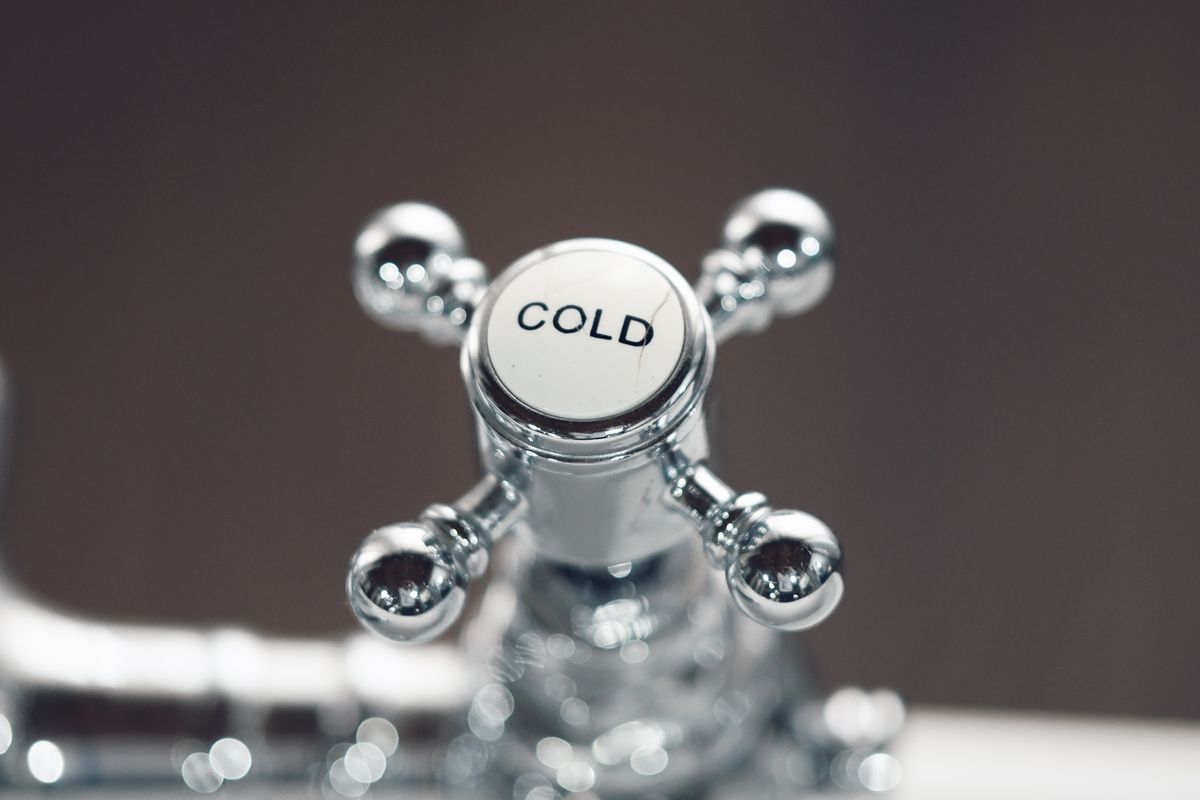
“Lukewarm” is useless advice until it becomes physical. The working definition: water should feel like nothing on the inside of the wrist — no warmth, no coolness, just temperature you stop noticing within a second. A second check is the steam: a bathroom that fogs fast is a shower running past lukewarm. Most people do not need to get this perfect every day. Getting it right on the daily quick showers and accepting a hot one a few times a week is a realistic ceiling, and it protects more barrier than chasing exact temperatures.
The payback
Two mitigations carry most of the weight. First, shorten contact rather than chasing temperature perfection — five hot minutes extracts less than twenty, so on the days you run hot, run short. Second, pay the bill immediately: moisturize within about three minutes of toweling off, while the skin is still damp. That is the damp-skin rule from the body care order. On days the shower ran hot, reach for a cream rather than a lotion — the texture assessment sorts which class holds more occlusion. Where the evidence stops is worth naming: no published number defines the exact temperature threshold, so the wrist test is the honest tool, and everything beyond it is judgment.
Frequently asked
- How hot is too hot for a shower?
- The honest test is the inside of your wrist — if the water registers as clearly warm there, it is past lukewarm for skin purposes. No label or guideline prints a number, and neither will we, because the wrist test is the version people actually use.
- Does cold water at the end of a shower do anything?
- It lowers the amount of heat your skin holds, which can ease the post-shower itch and tightness a hot shower leaves behind. The claim that it closes pores does not hold — pores have no muscles and nothing to close with. Treat it as comfort and mitigation, not repair.
- Is moisturizing after a shower really that important?
- Yes, and timing is most of it. Apply lotion within about three minutes of toweling off, while the skin is still damp — humectants pull from that surface water and occlusives seal it in. The same bottle applied an hour later does a fraction of the work.